Thursday, August 21, 2014

The 25 essential must-see places part three

The 25 essential must-see places
The mixture of civilizations, cultures and empires has given Turkey a historical riches slo explosion comparable to its natural beauty. Considered the museum Largest outdoor world, the country has turquoise beaches, waterfalls, forests, rock formations and Nicaraguan cities with lots to see.
Antalya and its coast (on the coast mediterrnea)
East of Antalya, Alanya combines the attractiveness of its historical center especially the magnificent fortress with over twenty kilometers of beaches fringed by soft five-star hotels.
shown, the coast of Alanya.
Other Sites and monuments of interest:

In southeastern Anatolia
Belkis-Zeugma Ruins
Perhaps even more famous than the remains of the ancient citadel of Zeugma, founded by one of the generals of Alexander the Great and later important enclave of Silk Road, are renowned baklavas city Gazi Antep Antep or, 50 kms. ruins), a puff pastry with honey and pistachios category of " perishable monument . " Harran and Lake Balikligl in URFA (ancient Edessa) are Nicas in Turkey houses the hive population n of Harran, built with adobe on a design that dates back to the third century BC Nearby, Urfa, " City of the Prophets "for being the birthplace of Abraham and Job, has a sacred lake (Balikligl) where, before two beautiful mosques that enter the water, free swimming carp fishing anyone considered untouchable. Mardin The old Marida, built on a hill overlooking the plain mesopotmica, is starting to become a tourist destination due to its popular stone architecture without roofs, a chaotic bazaar and a collection of old buildings among which the castle, a couple of madrassas islmicos several temples and Christian, and a splendid post office housed in old caravanserai.

Source: http://viajar.elperiodico.com/turquia/lugar3.htm


The 25 essential must-see places Part Two

The 25 essential must-see places
The mixture of civilizations, cultures and empires has given Turkey a burst only by its natural beauty rich history.Considered the largest museum outside world, the country has turquoise beaches, waterfalls, forests, unique rock formations and cities with lots to see.
Nature and ruins around Antalya (on the Mediterranean coast)
emphasize the ancient Myra (or Mira) which is accessed from Demre Kale with its Lycian tombs carved into the rock and Greco-Roman theater; it relates to St. Nicholas of Myra as the real Santa Claus; the romantic city Lycian ruins of Phaselis (or Tekirova Phaselis or), expanded along three creeks suggestive; Roman amphitheater in Aspendos (Belkis), the best preserved of Antiquity; and the beautiful waterfalls in the High DDEN Lara Plaji, at its mouth on the Mediterranean.
Pictured Roman theater in Aspendos.
Other Sites and monuments of interest:

On the Mediterranean coast
Antalya City
Gateway to the so-called Turkish Riviera, Antalya surprised by the charm of its restored old Roman port and marina and the preservation of the old neighborhood, Kaleiçi where old Ottoman houses are mixed with Roman ruins.Pozo St. Paul in Tarsus (Tarsi) Founded by the Argonauts according to Strabo and birthplace of the apostle Paul, Tarsus still remains of the supposed holy house that are made ​​visible to the visitor under slabs of glass and its miraculous well of the garden (Senpol Kuyusu), which they say has healing properties mígicas. Antakya City In ancient Antioch found the fabulous Archaeological Museum, which exhibits a splendid collection of Roman mosaics and Byzantine, and is regarded as " the first cathedral in the world ", the Grotto of St. Peter, carved into the hillside Staurin (de la Cruz) and declared Holy Place by the Vatican in 1983.


Source: http://viajar.elperiodico.com/turquia/lugar2.htm

The 25 essential must-see places Part one

The 25 essential must-see places
The mixture of civilizations, cultures and empires has given Turkey a burst only by its natural beauty rich history.Considered the largest museum outside world, the country has turquoise beaches, waterfalls, forests, unique rock formations and cities with lots to see.
Ruins of Pergamum and Ephesus legendary (On the shores of the Aegean)
In the province of Izmir (ancient Smyrna, birthplace of Homer), the current Bergama sits next to the ruins of ancient Pergamum, home to the second largest library of Antiquity there invented the scrolls, after Alexandria, and renamed Asclepieion, a large medical complex sacred; while in Ephesus Temple of Artemis headquarters, Wonders of Antiquity, there is a magnificent example of monumental Roman city, partially excavated and rebuilt during the nineteenth century.
Pictured ruins of Pergamon, now Bergama.
Other Sites and monuments of interest:

South of the Sea of ​​Marmara
Bursa City and nearby town of Iznik (the ancient Nicaea)
Very different, both are tied to the holiday destination of Istanbul Iznik tiles for its production and its well-preserved old town surrounded by cypress trees, peach trees and vineyards surrounded of mountains and a lake at his feet;and Bursa, the first capital of the Ottoman Empire, for its spa (ekirge) attached to the slopes of Mount Uludag and mosques in the fifteenth century the Sublime (Ulu Camii) and Green (Yesil Camii), annexed to the Green Tomb neighborhood (Yesil Trbe).

On the shores of the Aegean
Ruins of Assos
in the Biga Peninsula, under fantastic cliffs, between old stones converted into hotels front of a beautiful harbor and just lives off tourism survives memory deep discussions of Plato and Aristotle and his pupil footprint . two of the Apostles, St. Paul and St. Luke, who sailed from here to the nearby Greek island of Lesbos Ancient cities of Priene, Miletus and Didyma The port of Kusadasi is the ideal starting point to visit three interesting sites starting: beautiful Priene , on the slopes of Monte Mykale; Miletus the grid south of the current Ske, known for being the first city rebuilt (in 479 BC) on a perfect urban grid; and, associated with it, the temple of Didyma, one of the most prestigious oracle in the Greek world.
etween the Aegean and Mediterranean
Villas Bodrum, Marmaris, Fethiye and Oludeniz
Waterfront these bright turquoise seas, protected from pine covered slopes, these three tourist sites hosting the avid traveler to combine the bustle of its ports with luxury yachts with the beauty of its historic districts or archaeological remains that adorn them.

7 more attractive places for tourism in Rome

7 more attractive places for tourism in Rome 

Rome is the Eternal City is filled with monuments and great monuments are the center of the greatest civilizations Vtjd magnificent palaces and ancient churches, cathedrals and monuments and statues Romania and fountains.

Here are 7 more attractive places for tourism in Rome:

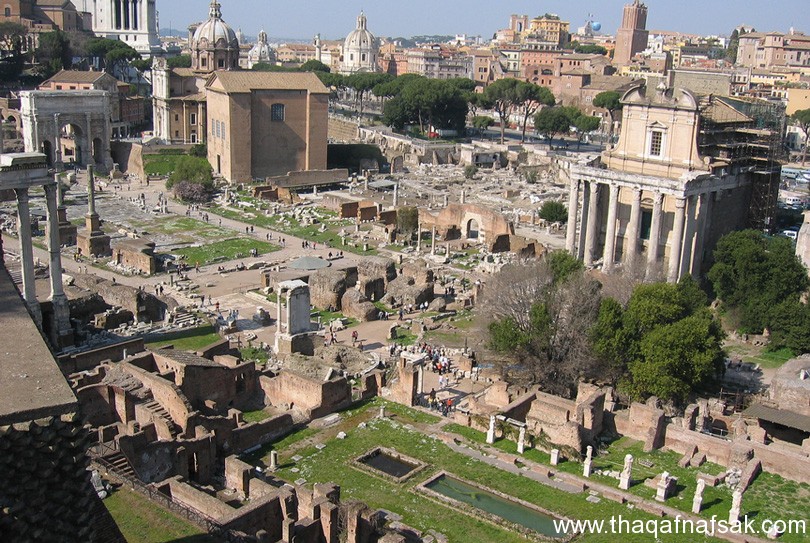
7 Field Roman (Roman Forum)


Located in a small valley between the hills of platinum and Alcabatolen (Palatine and Capitoline)

Ancient Roman field was always going to be a densely populated, where he was a gathering place and marches and speeches and public affairs center for business too

But now it has become a deserted field not only by some of the architectural monuments include the brackets Septimius Severus and Titus (the Arches of Septimius Severus and Titus) and the Temple of Antonius Pius and Faustina and the Temple of Saturn. (The Temple of Antoninus Pius and Faustina and the Temple of Saturn)

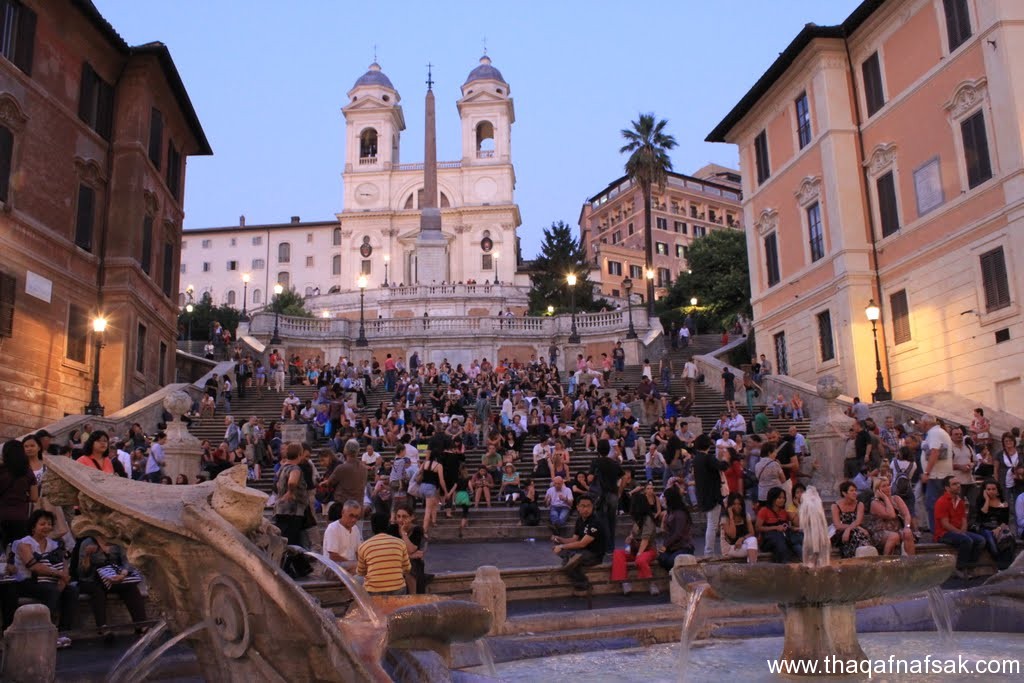
6 stairs Spanish (Spanish Steps)


Is a long ways consists of 135 Salamah has built-funded French Between 1721 and 1725 in order to link Spain Alborbonih Vatican with the French Church Trinita de Monti 
(the French church, Trinità dei Monti) 
 
5-Fountain of Trevi (Trevi Fountain)


Is the largest Baroque fountain was built over 1762 years ago, one of the design of Nicola Salvi (Nicola Salvi) by forming a sculptural sea god Neptune flanked by two Triton (son of the Lord of the sea by the novel by Amazigh) 

Site was selected station being connected to channel water Aqua Virgo, which was built in the 19th century BC. Legend says that casting a coin which will come someday due to Rome 

4 Vatican Museums (Vatican Museums)


Founded by Pope Bolios in 6 th century AD and these museums exist inside Vatican City and includes some of the important implications in the world and also includes spiral staircases and rooms Rafael and the magnificent Sistine Chapel 
He has Michelangelo drawing roof of the church between 1508 and 15012 to become one of the most important and beautiful works in drawing 

3 Alancion (Pantheon)


It is the best archaeological Roman building in terms of conservation, and perhaps the best preserved building from that era in the world 
Was built in 126 AD as a temple to all the gods of ancient Rome turned into a Romanian Catholic Church since the 17th century .. consists of a large circular portico with three of the massive granite columns 
Opens in the lobby of the gallery surmounted by surname, although that passed this building two thousand years to build, but that this dome is still the largest concrete dome in the world 

2 St. Peter's Church (St. Peter's Basilica)


The center of the Catholic world and the most attractive places for tourism, with a height of 120 meters from the inside 
It was described by a number of critics as "occupies a prominent place in the Christian world and as" the greatest of all other Christian churches and the cause of the revered back, because the cathedral, according to Catholic tradition contains the tomb of St. Peter, and located the shrine directly under the main altar of the cathedral, which is called "the altar of recognition" or "papal altar," or "the altar of St. Peter" and engaged many of the famous artists in this church Mikilangal such as Michelangelo, which he drew the dome and Bernini Bernini, who designed the great St. Peter's 

1 Colosseum (Colosseum)


Colosseum or Alkolseyoum or Alclausam or so-called asset runway Alflavi is a giant Roman amphitheater in the center of the city of Rome originally sought about 45,000 to 50,000 spectators. The arena is used in fighting gladiators (Algeladiatorz) and mass competitions. Been initiated to build between 70 and 72 AD under the emperor Vespasian and was completed 80 years mainly in the reign of Titus, but has some additional changes in the reign of Domitian 

Thus ended 7 more attractive places for tourism in Rome 

Source: touropia